Hafto Breaks Down The Lore & Creative Process Behind New Album “Heart On Ice”
Intro:
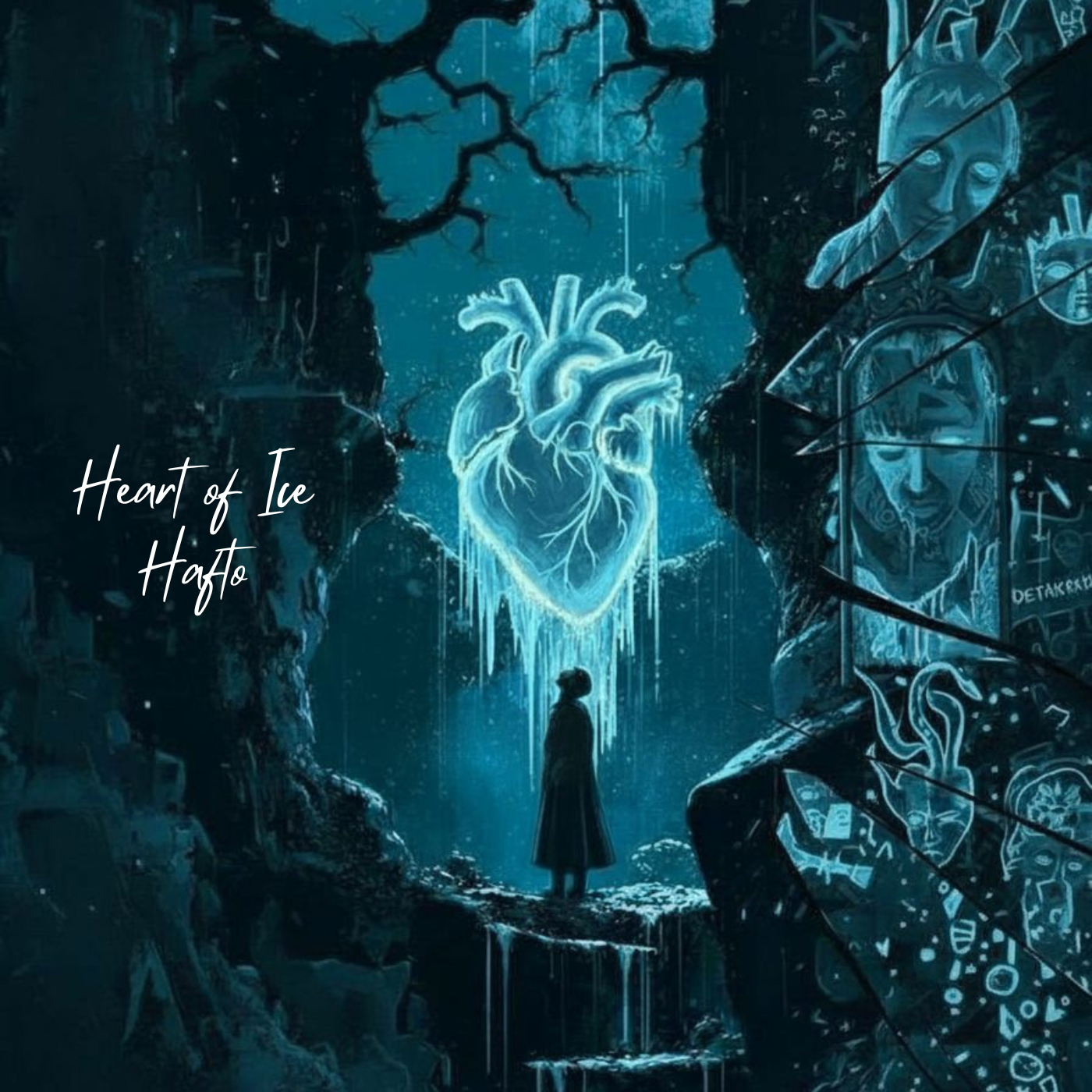
For today’s article, we have an interview with Dallas-native Hafto after the release of his new album “Heart Of Ice”. His style of Hip-Hop can be described as introspective & alternative while adding in a ton of melodic elements. One of the things that makes Hafto stand out is the way he organically injects his South Asian heritage & culture into his art. Furthermore, Hafto’s answers provide a wealth of depth & insight into how he created his latest piece of work. Before reading our brief conversation, make sure you check out this new album below.
Me: What was the creative process like while making “Heart Of Ice”?
Hafto: Making Heart of Ice was a really contemplative and almost therapeutic process. It wasn't just about making something that sounds good; it was about being honest with myself and my listeners about what I was feeling and learning. I created and composed the project in my own place, letting my experiences with betrayal, self-discovery, and emotional hardening influence the music rather than trying to make it sound like what people wanted. Seeing how my emotions were changing gave me a lot of ideas.
I noticed that I was becoming more guarded and protective of myself instead of vulnerable, and I wanted to write about it instead of hiding from it. As an independent musician who is influenced by South Asian culture and my own identity, I used those elements to construct the EP's sound and story. In the end, the goal was to turn suffering into purpose and personal truths into a musical language that everyone can understand.
Nice! And as far as your sound, how would you describe it to someone who’s never heard it before? Has it evolved over time?
If you've never heard my music before, I would say it's a mix of hip hop and alternative hip hop that tells stories and is emotionally honest. Each song has a story and a sentiment that are woven together. My style typically has subtle South Asian musical influences that show where I come from without being shallow. This gives the music a texture that is both personal and exploratory. It's introspective and atmospheric, and it talks honestly about grief, growth, and resilience. It's made to connect with those who want depth and real feeling instead of just polished sound.
My music has changed a lot over time. In the past, I was more focused on finding my voice and trying out different forms. Now, I'm more deliberate about what I'm saying and how I'm saying it, utilizing my sound as a mirror for changes in myself and self-discovery. In the end, the change isn't just in style; it's also in emotion. I'm communicating deeper truths and allowing people to join me on that journey.
What made you choose the title “Heart of Ice” as the name for this new album?
When I came up with the phrase Heart of Ice, I was thinking about something more deeper than just sounding icy. It's about how your emotions change when you've been open and vulnerable so many times that you learn to protect yourself as a way to stay alive. In everyday speech, having a "heart of ice" usually means being emotionally distant or putting up a wall to keep from getting hurt again. It's a metaphor for protecting oneself by staying away from others instead of being indifferent or apathetic.
For this EP, that picture perfectly showed how I felt at the time. It made me realize the agony I had been through, the ways I had been hurt, and how that affected how I felt about being vulnerable. Heart of Ice was a way to express that I wasn't closing down completely, but I was learning how and where to preserve my truth. I wanted the title to show both the honesty and the tension in that change. By giving the record this title, I invited listeners into a realm that is honest about suffering, strength, and the hard balance between being open and protecting yourself. It's about accepting grief without hiding from it.
And ultimately, what proved to be the most challenging part of the creation process?
Putting everything together in a way that felt real and whole was undoubtedly the hardest element of making Heart of Ice. This included the music itself and the graphics that show the emotional core of the record. It was hard for me to step back and consider the whole project as finished instead than still in process because I put so much of my own growth, turmoil, and self-reflection into the songs. Choosing the album cover was especially hard because I had a very clear idea of how the emotional themes should be shown visually.
When traditional methods didn't fit with that idea or with the resources I had as an independent artist, I turned to AI to help me make those ideas a reality. It wasn't an easy choice, and some people might perceive it as a compromise, but the final image really portrays the EP's emotional landscape and fits with its themes of remoteness, reflection, and selling out, as referenced in the song: "The Price". In the end, the hardest but most important part of the whole process was dealing with those artistic choices about music, graphics, and the integrity of what I wanted to express.
That’s a great story! From there, what does your life look like outside of music? Any hobbies or interests that fans may not expect?
Even when I'm not in the studio, creativity and introspection are still a big part of my life outside of music. I write poetry a lot; it's where a lot of my first ideas came from long before I even thought about recording. I also publish essays and art comments on my Substack, which provides me space to think about the emotional and philosophical issues that go into my music. I love movies and comic books, too. I read and watch them not just for fun, but also to get ideas for stories, whether it's through storytelling, developing a visual universe, or character arcs. Many people might not think that I enjoy collecting Legos as a pastime. I feel that building complicated sets is a pleasant way to detach while still doing something real. Bollywood is another thing I love. It has changed how I feel about musical narrative and cultural expression, and those influences often come out in my work without my even realizing it.
At what point in time did you realize that music was your calling? Or was it more of a natural progression?
It didn't happen all at once, but it did happen in a moment that felt like calm and freedom. For a long time, I wrote and made things, like poetry, thoughts, and inner chaos. But the first time I put something into music and felt that instant tranquility, like I was finally letting go in a way that helped me breathe, that's when I realized this was more than a pastime. Music became a place where feelings that were too weighty to talk about could finally exist in a way that made sense to me and, eventually, to others.
It was both therapy and expression. It was both a natural progression—from writing poems and thinking quietly to making music and performing—and a calling that came to me when I realized how much music helped me when I was down. Every step I took to improve my skills just made me more sure that this was something I needed to do, not just something I loved.
Additionally, do you have any other upcoming releases or plans that you're comfortable sharing with the readers?
I don't have any official singles lined up yet, but I'm already working on what's next, and I'm really thrilled about it. I've been working on a couple of new EP ideas, including "Lost in Time" and "Dreams of Insomnia." Both will look at some of the same emotional themes, like how our inner worlds change and warp with time, how vulnerable we are, and how we reflect on ourselves. I want the following projects to build on what I started with Heart of Ice and find new, engaging ways to express those sensations that still seem real and genuine.
Aside from that, my main goal right now is to build a strong base so that I can keep making things on my own terms and eventually get to a point where I don't have to give up my artistic vision to make money. I'm incredibly excited to share more as these concepts develop and give people something fresh to engage with on a deeper level.
And finally, in your own words, why should a new listener check out this new release today?
I think Heart of Ice is worth your time if you haven't heard it yet. It's more than simply another set of songs; it's an honest, emotional trip that lets listeners into a true human experience instead of just background noise. I created and organized this EP from a place of deep self-reflection, dealing with betrayal, resilience, identity, and the point at which vulnerability becomes self-preservation. That's not something you hear on every release. Heart of Ice doesn't make you feel better; it puts you right in the middle of the tension between being open and being guarded. I think that makes it relevant in a way that is both personal and strong. Critics have talked about the melancholy soundscapes and ambient beats that don't just sound good but also seem like stages of growth and self-discovery. That's exactly what I intended to communicate. This release is a place to feel seen, not just entertained, if you want music that prioritizes depth over performance and honesty over comfort.